AG INSIGHT | 03/08/2026
The month in review – July 2026
|
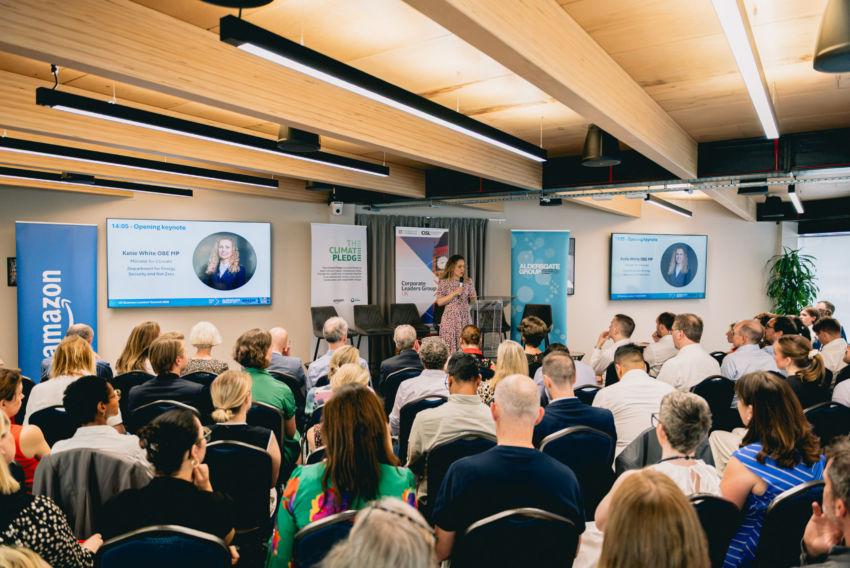
On the 21st of July we published our new report The Business Case for a National Water Framework. This report examines the water risks facing England and the implications for businesses and the government’s growth agenda. The report proposes 20 recommendations to simplify legislation, empower regional actors, rationalise regulation and facilitate investment over the coming years. Thank you to our members and other external organisations who contributed to the workshops and development of this report. Ahead of the government’s annual parliamentary Climate and Nature moment, in partnership with Corporate Leaders Group, we convened business leaders, policymakers, and experts to collaborate on a statement to back the UK’s long-term climate and nature ambitions and call for faster action to seize the economic opportunities of a resilient, low-carbon, and nature-positive future. You can download the business statement here. On the 15th of July we gave oral evidence to the Environmental Audit Committee’s inquiry into the treasury and the economics of climate and nature. Our evidence emphasised the importance of treasury creating consistent, long-term policy clarity to give businesses the certainty and confidence they need to invest in climate and nature issues. Green skills were raised as an example of where greater clarity about future funding and policy direction would create the conditions for more investment in training and apprenticeships. We also highlighted the opportunity for the treasury to unlock a wave of investment in low carbon technology through reallocating the cost of policy levies applied to electricity bills onto general taxation. Following the change in Prime Minister, the Secretariat has been closely tracking the new Cabinet lineup and its implications for climate and nature policy. Notably, Miatta Fahnbulleh MP has been appointed Secretary of State for Energy Security and Net Zero, with Ed Miliband moving to the Foreign Office, while Angela Eagle MP takes on the Defra brief. We will be seeking early engagement with the new ministerial teams and will update members as our understanding of the new government’s priorities develops. With Parliament now in recess, the pace of Westminster announcements will naturally ease over the coming weeks, and the Secretariat will use the time to progress our research programme ahead of the autumn. Looking ahead to September, conference season will be in full swing, and we look forward to attending party conferences alongside many of our members. |
 |
2. Policy update |
|
In the past month, Aldersgate Group has: Business case for climate actionFollowing an invitation from DESNZ, Beth (Head of Policy) delivered a session for the department’s Priority Projects Team, which provides focused support and challenge to teams delivering key ministerial priorities. The session explored the business perspective on delivering the economic benefits of net zero and the value-for-money case for a sustainable economy. Beth also provided a deep dive into industrial decarbonisation policy and highlighted cross-sector business recommendations on electricity prices, skills and demand-side measures. This month, the DESNZ Net Zero Strategy Team asked the Aldersgate Group to lead the Net Zero Council‘s work on cross-cutting barriers identified through the Council and its Sector Transition Plans. In August, the Aldersgate Group will convene a workshop with Council members to refine the programme of work and ensure the Council focuses its efforts where it can add the greatest strategic value. Following contributions from various organisation through the Business Leader’s Summit 2026, during London Climate Action Week, Aldersgate Group and UK Climate Leaders Group UK shared the group statement with MPs and policymakers. Coinciding with the Government’s own Nature and Climate Moment, the statement urged policymakers to be more vocal ad build on strong foundations to accelerate investment in Britain’s resilient, low carbon, nature-positive economic future. This was shared and endorsed by DESNZ and covered in BusinessGreen. Net Zero and Nature Positive case studiesWe are drafting local case studies of where national policies relating to net zero and nature restoration have helped to revive local economies and restore communities. These case studies will offer bold, evidence-based demonstrations of how the climate and nature transition is benefitting people, communities, and businesses across the country now and changing the UK for the better. We hope they will allow us to build a story we can use to raise awareness, stimulate engagement and secure support from policy makers. WaterAs mentioned above, The Business Case for a National Water Framework was published on July 21. The recommendation’s highlights include a single water systems regulator, a NESO-style body for water, simplified farming water regulations, catchment nutrient budgeting, a private investment framework for water outcomes and Extended Producer Responsibility for water improvements. The report has been picked up in trade press including Water Magazine, Utility Week and Business Green. The report followed several months of engagement with members, regulators, government departments and other stakeholders across the water sector. Our business workshop in April helped shape the recommendations by identifying the key water-related risks and challenges facing businesses. We also convened a roundtable with Defra in June, bringing together investors and officials working on the Clean Water Bill to discuss the barriers to investment and the policy reforms needed to support a more resilient water system. Thanks to all who contributed their time and expertise to this project. The team will be disseminating the report amongst interested MPs ahead of the Bill’s introduction to the House of Commons in November. Enabling private sector action on natureThe Policy Team has been engaged with the National Audit Office to discuss nature markets. The Team at the NAO are producing a landscape report, which will be published in the autumn, examining the current state of Defra’s work on private nature markets. During an interview, Aldersgate Group gave an overall perspective on the successes and failures of Defra’s initiatives in this area so far, praising BNG and the development of high-integrity credits, while acknowledging the loopholes, policy uncertainty and insufficient consideration given demand-drivers that have led to a disappointing rate of investment in nature credits to date. We will remain engaged with the NAO on this topic and look forward to the impact of their report. Built environmentWe met with the DESNZ team responsible for Minimum Energy Efficiency Standards (MEES) to discuss the recent announcement that the minimum standard for privately rented non-domestic property over 1000 square meters will be raised to Energy Performance Certificate (EPC) B by 2031. The regulation will obligate building owners to improve energy efficiency and represents an opportunity for occupiers to reduce their energy use and emissions. We learned that exemptions applying to the current minimum standard of EPC E are likely to also be applied to the new minimum of B. This creates allowances for buildings where upgrade is not ‘cost effective’ meaning that in practice many buildings will not have to reach the new EPC B standard. Before publishing a consultation response, the DESNZ team is planning to engage with industry on how the 1000 square meter cut off will be applied to buildings with multiple occupiers. TransportAldersgate Group is collaborating with the Renewable Energy Association, developing a package of policy recommendations to enable the decarbonisation of HGVs. We are currently conducting a business survey, which asks about strategic options for low-carbon haulage in the UK, the barriers and considerations businesses face, and how well the current policy environment is supporting the transition. We will also be holding an online workshop in August. This is an opportunity to help shape our final recommendations to government ahead of key policy decisions on the transition to zero-emission HGVs. Building on evidence gathered through our stakeholder survey and wider engagement, the workshop will present our draft recommendations and provide an opportunity to test and refine them with businesses and experts from across the sector. Electricity costs and electrificationThe Aldersgate Group continues to support the work of the Electricity Bills Taskforce and is engaged in targeted advocacy ahead of the Autumn Budget, including calling on the Chancellor to move policy costs from electricity bills to general taxation. This forms part of a wider effort to improve electricity price competitiveness and accelerate electrification. We are also working with the Taskforce on policy recommendations and advocacy to reduce electricity constraint management costs. Working with Campaign Collective, Aldersgate Group supported a featured campaign in the Financial Times, urging the adoption of the EU Electrification Action Plan and rapid progress on electrification of UK industry, homes, and transport. We also used this to maintain momentum on our wider electrification advocacy, including calling for the rebalancing of levies by moving them off bills and onto general taxation, unlocking sustained investment in electrification and a direct, anti-inflationary easing of the cost of living. Industrial decarbonisationThe Energy Security and Net Zero Committee has launched an inquiry into the relationship between high UK energy costs, industrial decarbonisation and economic growth, with a particular focus on industrial electrification. The deadline for submissions is 18 September. The Aldersgate Group is considering a response. The DESNZ Low Carbon Products team has alerted the Aldersgate Group to a new Department for Business, Innovation, Science and Trade call for evidence on a Great Britain Digital Product Records regime. This builds on the government’s work to develop a policy framework for low-carbon industrial products, including proposals for digital product information and records for steel, cement and concrete. The policy area closely aligns with the Aldersgate Group’s recent report on the role of public procurement in growing markets for low-carbon industrial products, as well as our earlier work on circular economy policy and legislative divergence with the EU. The Aldersgate Group is considering a response to the call for evidence. This month, the EU published its proposal to revise the EU Emissions Trading System (EU ETS), setting the framework for Phase 5 (2031–2040) in line with its 2040 climate target. Key proposals include a slower emissions reduction trajectory, conditional free allowances, new revenue rules and expanding the scope. The package was also accompanied by a new Electrification Action Plan. Aldersgate Group is keen to hear members’ views on these developments as we consider future policy advocacy on the UK ETS. Industrial StrategyFollowing the launch event at London Climate Action Week, the Aldersgate Group has begun a new project exploring the decarbonisation of the creative industries, one of the eight growth sectors identified in the Modern Industrial Strategy. The work is likely to particularly focus on policy recommendations for decarbonising temporary power and transport. The team is keen to identify opportunities for cross-sector collaboration where common decarbonisation challenges and policy solutions exist in these areas. This month, we met with officials supporting the Industrial Strategy Council to discuss several upcoming Aldersgate Group projects, including our work on creative industries decarbonisation, water system reform and HGV decarbonisation. We also discussed the important role of public procurement for creating demand for low carbon goods and services and competitive electricity prices in supporting UK competitiveness and growth. Climate adaptationThe Aldersgate Group is launching a new project exploring how climate adaptation can support the government’s growth agenda. Using a place-based approach, the project will examine how climate risks could affect priority growth areas, the roles of national and local government, businesses and other stakeholders in delivering adaptation, and the planning and funding mechanisms needed to enable resilient growth. The project will develop practical policy recommendations. |
|
3. AG Insights |
|
Beyond Net Zero: Why nature is the next frontier for UK business resilience Jack Kunkle, Senior Membership and Communications Officer at Aldersgate Group, reports on discussions about nature and business resilience from Aldersgate Group’s Executive Business Summit. Net zero and the art of the “ready-made solution” Jack Kunkle, Senior Membership and Communications Officer at Aldersgate Group, reports on discussions with the Rt Hon Jim Murphy, Founder of Arden Strategies, and James Murray, editor-in-chief, Business Green, at Aldersgate Group’s Q1 Members’ Meeting. From targets to traction: aligning business incentives with the Environment Act. Guy Thompson, Director at Aldersgate Group, wrote for the website on how smarter regulation and better incentives can unlock private investment to clean up rivers, restore nature and grow the economy. |