AG INSIGHT | 30/03/2026
Q1 Members’ Meeting: Net zero and the art of the “ready-made solution”
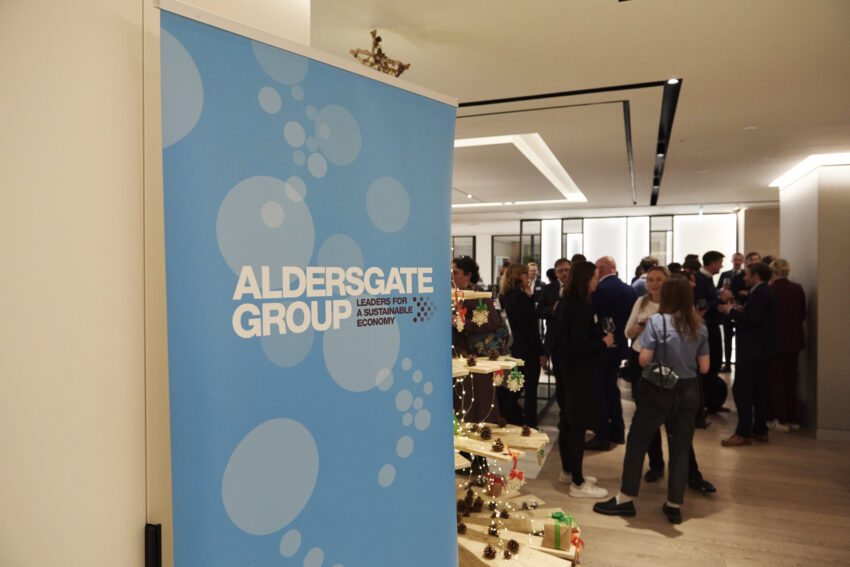
Earlier this month, Aldersgate Group members gathered online for our Q1 Members’
Meeting. Our speakers were Jim Murphy (Founder, Arden Strategies) and James Murray
(editor-in-chief, Business Green).
The tone of the conversation reflected the stark reality the UK faces in a turbulent
geopolitical situation and marred by huge global energy and supply chain shocks.
Despite the sobering outlook, there was a clear consensus that the UK is in a strong
position to harness the geopolitical storm to double down on its plans for the net zero
transition. To do this the way we talk about net zero has to change.
For a long time, the environmental movement has relied on “global responsibility” as its
north star; but in a world where governments are waking up every day to what we might
call the ‘Five Bs’ – “boats, bills, bombs, beds, and bonds”, otherwise known as
immigration, cost of living, war, the NHS, budgetary concerns – abstract responsibility is
not as potent with the public as day-to-day issues.
The takeaway from our discussion wasn’t that we should lower our climate and
environmental ambition. Instead, we need to stop “inviting” the government into our
problems and start showing how our aims map into their priorities.
We’ve moved past the stage where we need to prove green-tech and renewable energy
innovations work. As was pointed out during the session, the “sceptic” argument has
lost its credibility when a quarter of new car sales are electric and entire nations are
running their economies on renewables. The sceptical arguments about the so-called
unreliability or unaffordability of renewable energy generation has been blown out of the
water as the public are now enduring their second oil price shock in 4 years.
The “next frontier” of this transition isn’t just about decarbonising, it’s about resilience.
Whether it’s the Panama Canal drying up or the sudden fragility of global food chains,
climate action cannot be dismissed as a “woke” concern; these are hard realities that
businesses are already managing. The most effective narrative for net zero today isn’t
only about saving the planet; it’s the “patriotic choice” for a country that wants energy
independence from authoritarian states and volatile energy markets.
One of the most refreshing parts of the discussion was the honesty about how we
communicate. Do we lean into the “optimism of opportunity” – the jobs, the prosperity,
the industrial revitalisation? Or do we take the “Greta Thunberg approach” and simply
tell the terrifying truth?
The answer, as it turns out, is a bit of both. We need to be clear-eyed about the risks of
ecosystem collapse while simultaneously bringing the government “ready-made
solutions”. We shouldn’t be adding to a Minister’s list of problems; we should be the
group that helps them cross one off.
As the session wrapped up, the mood was optimistic and determined. The consensus
was that net zero is no longer a discretionary expense we can cut when times get tough.
It’s the very basis of our future competitiveness. There is now widespread, clear-eyed
thinking that the only viable route to a stable and secure economy is through
decarbonisation, and UK businesses are determined to get us there.
The job for forward-leaning businesses and civil society is to make sure that when the
political “naysayers” talk about the cost of action, we are there to remind them of the far
more staggering and currently headline-leading cost of doing nothing. Let’s keep
bringing the solutions.