AG INSIGHT | 02/04/2026
Beyond Net Zero: Why nature is the next frontier for UK business resilience
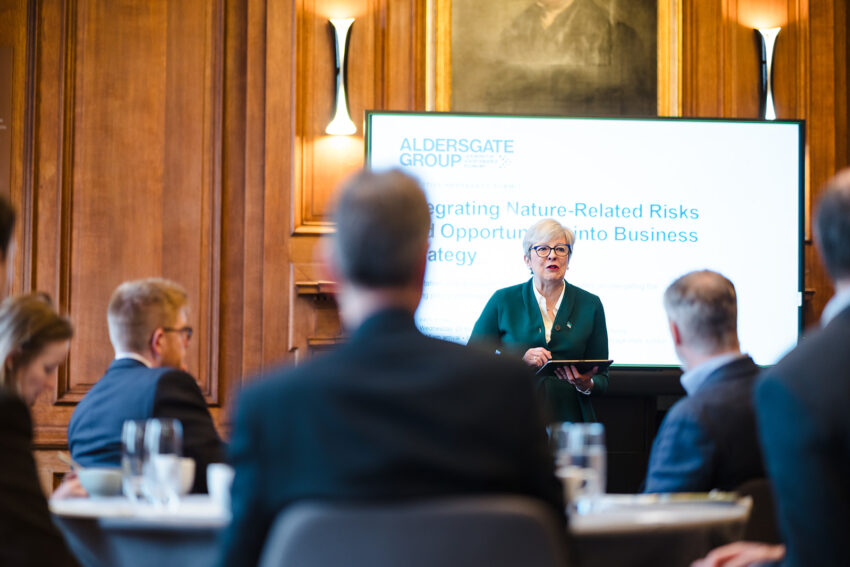
The corporate world has treated “nature” as a synonym for “the environment”, we were told at the Aldersgate Group’s Executive Business Summit in March, but this narrow definition is not fit for purpose. For senior leaders across UK PLC, nature is increasingly understood as both a fundamental supply chain opportunity and a critical economic risk.
The risk to the UK economy from nature degradation over the next decade is projected to be a 12% loss to GDP, greater than the impacts of the Global Financial Crisis and COVID-19, and crucially, unlike those previous shocks, there is no “bounce back” from the collapse of ecosystems – and the critical services they provide. To navigate this, businesses need more than just awareness; they need a robust domestic regulatory framework and a mature expertise that integrates nature into the heart of their business strategy.
The materiality of nature risk
The transition from viewing nature as an abstract concept to a material risk is already underway. We have seen how environmental volatility directly impacts the bottom line. The 2022 energy crisis, for instance, lead to a surge in fertiliser costs by 300-400%, leading to the closure of 5% of UK dairy farms. This serves as a stark reminder that nature risk is not a distant “green” concern, it is a “here and now” supply chain reality. If critical components of your business’s supply chain are heavily integrated into volatile global energy markets or rely on consistent climatic conditions, your business shares the risk of those volatile markets or a changing climate. Understanding where nature can mitigate those risks in your business’s supply chains is therefore critical.
Unlike climate change, which can often feel abstract due to the singular focus on emissions, nature risk is inherently local and tangible. Whether it is water scarcity affecting manufacturing or flooding impacting infrastructure, these risks are immediate and measurable. Summit participants noted that while sea-level rise is a long-term concern, a single flood can wipe out a company’s profits next year. This proximity makes nature a powerful lever for engaging boards, yet many still struggle to link nature degradation to financial performance.
Setting the “rules of the game”
The overwhelming consensus from our Summit participants was a call for the UK government to set high-level “rules of the game”. While businesses recognise the risks, they are often paralysed by a confused policy and regulatory environment. This lack of clarity prevents those who want to do the right thing from moving forward, even when the necessary capital is available.
To unlock private investment at scale, we need a domestic framework that mirrors the impact of the Climate Change Act. This means:
- Legally enforced standards: Moving from voluntary reporting regimes, which are often perceived as weak and subject to change, to mandatory, investible standards.
- A ‘level playing field’: Using regulation to reward resilience and disincentivise those who leave risks unmanaged.
- Strategic planning: Genuine government leadership in spatial strategies to resolve the “join-up” issues currently facing land use and planning.
A key example discussed was Biodiversity Net Gain (BNG). While new compliance regimes can create short-term hurdles and unexpected costs, they are essential for creating the consistency that businesses need to plan for the long term.
Overcoming the barriers to action
Despite the clear business case, several domestic barriers remain. The planning process was cited as a major bottleneck, often failing to unlock nature-positive projects fast enough to maintain viable margins. Additionally, the “free rider” problem remains a concern, where a single company might bear the risk and cost of a nature-based solution while the benefits are shared by the wider community. Summit participants were keen to pursue solutions whereby, for example, businesses within a river catchment area all shared the responsibility for investing in the river’s health.
To overcome these, we must move beyond the “blockers vs. nature” debate. We need a “third voice” – facilitators who work collaboratively with the government to implement high standards across their sectors.
Conclusion: a business imperative
The message from the summit was clear: nature is intrinsic to business, not a side project for reporting. For the UK to remain competitive the government must provide the clarity, consistency and leadership required to integrate nature restoration into the core of our economic model.
By establishing a clear regulatory floor and rewarding resilience, the UK can move from a position of vulnerability to one of global leadership in nature-positive innovation. The money is there, and the business will is there. Now, we need the policy framework to match.
The Aldersgate Group continues to advocate for a policy environment that recognises nature as a business imperative. We believe that by simplifying standards and providing long-term certainty, the UK can lead the way in the global transition to a nature-positive economy.